What does RAIN stand for?
RFID has become a foundational technology for tracking, traceability, and automation across industries. Among the different RFID technologies available today, RAIN RFID has emerged as the global standard for large-scale, item-level identification.
The name RAIN refers to the key attributes of the technology: RAdio frequency IdentificatioN.
RAIN RFID enables organisations to read hundreds or thousands of tagged items quickly and accurately, without a line of sight. It is designed for scale, speed and reliability, making it ideal for applications such as retail inventory management, healthcare asset tracking, logistics, manufacturing, and industrial automation.
RAIN RFID is governed by global standards, primarily GS1 EPC Gen2/ISO 18000-63, ensuring interoperability between tags, readers and antennas from different vendors.
What is UHF? Understanding RFID Frequencies
UHF RFID (Ultra-High Frequency) refers to radio frequencies between 300 MHz and 3 GHz. RAIN RFID operates within the UHF band, typically between 860–930 MHz, depending on regional regulations.
UHF is well suited to RFID because it offers:
-
Long read ranges, often several metres or more
-
Fast read rates for high-volume environments
-
Good performance for bulk item-level tagging
To help explain the frequency bands and the applications that fall within those bands, please see the graph below:
The components that make RAIN RFID work
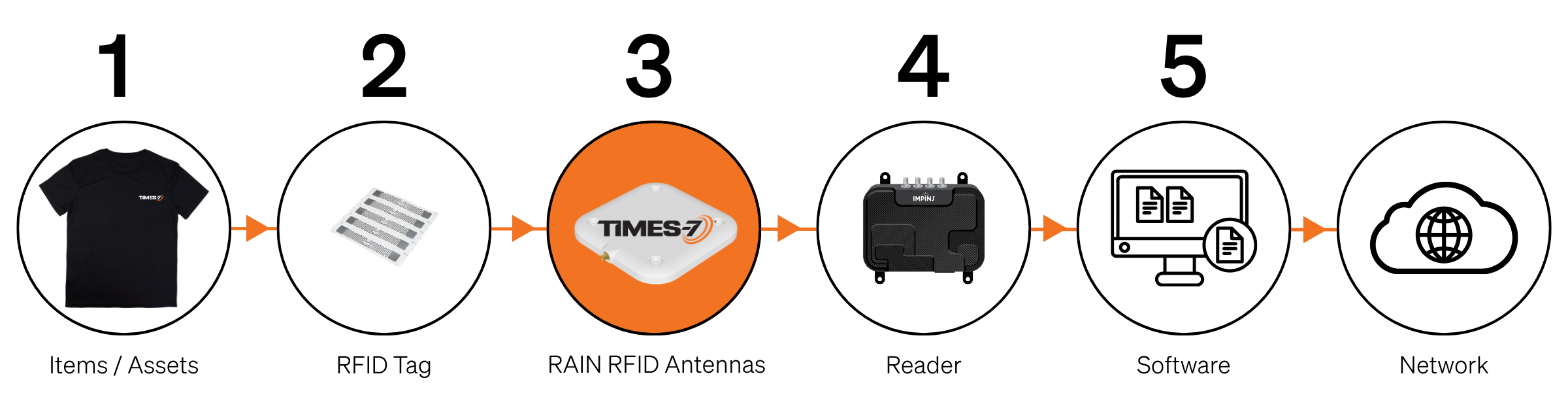
A successful RAIN RFID system depends on multiple hardware and software components working together seamlessly. Each plays a critical role in enabling reliable identification, tracking, and data capture at scale.
For clarity, let’s explore how these components function in a real-world retail setting, tracking a t-shirt through its journey from warehouse to customer.
- Item/ asset
- RFID Tags
- RFID Antennas
- RFID Readers
- Software of middleware
To see how this works in practice, consider a retail scenario: tracking a t-shirt from fulfilment centre to point of sale.
Component 1: The Item / Asset
What's being tracked
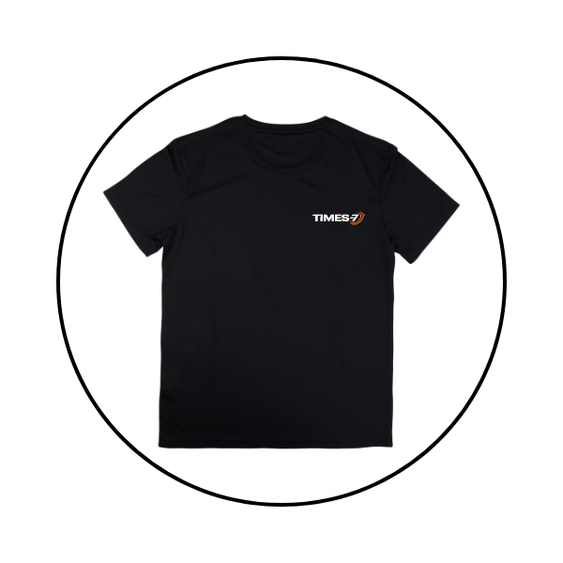
In this example, the asset is a retail item: a t-shirt with a unique SKU, forming part of the RFID-tagged retail inventory. These items move from warehouses and fulfilment centres to stores, where they travel from back of house to front of house, and can move between locations in-store (for example, from a shelf or rack to a fitting room, and back again), before reaching the point of sale, being purchased, and leaving the store.
All these movements provide valuable data: item movement patterns, stock turnover rate, product availability, shrinkage, and more. For this data to be captured and acted upon, each item needs to be RFID tagged, which we cover in the next section.
Component 2: RFID Tags
Giving assets a digital identity
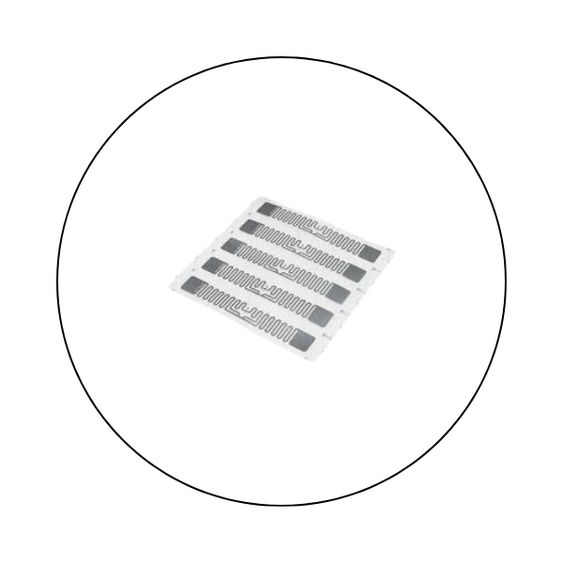
Each tool is fitted with an RFID tag, which contains:
- A microchip storing a unique identifier
- A small antenna that enables wireless communication
Most RAIN RFID tags are passive. They have no battery and are powered by the energy transmitted from the reader antenna. Tags can be attached to tools, garments, products, or assets, quietly turning physical items into digital data points.
Component 3: RFID Antenna
Shaping the read zone
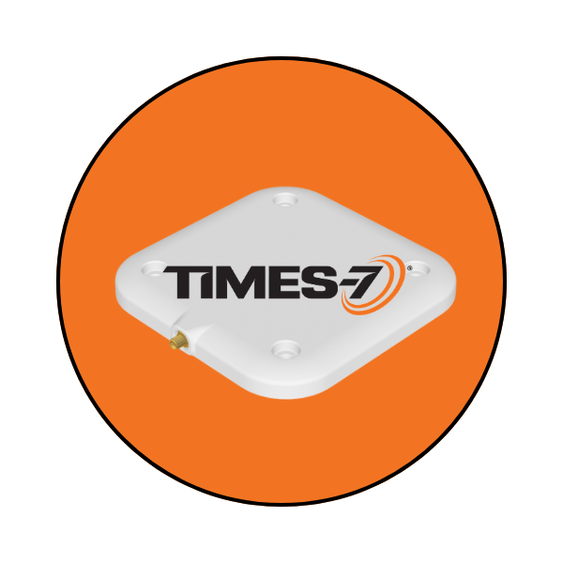
RFID antennas are the interface between the reader and the tagged item. They transmit and receive RF signals and define exactly where tags are detected.
Antennas influence system performance in three decisive ways:
- Read range and coverage shape: Antennas determine how far and in what pattern tags are read, from tightly controlled near-field zones to wide-area far-field coverage.
- Read accuracy and consistency: A well-matched antenna reduces missed reads, over-reads and variability, especially in dynamic environments.
- Environmental adaptability: The right antenna mitigates issues caused by metals, liquids, and densely packed materials, which are common in healthcare.
Component 4: RFID Reader
The system brain
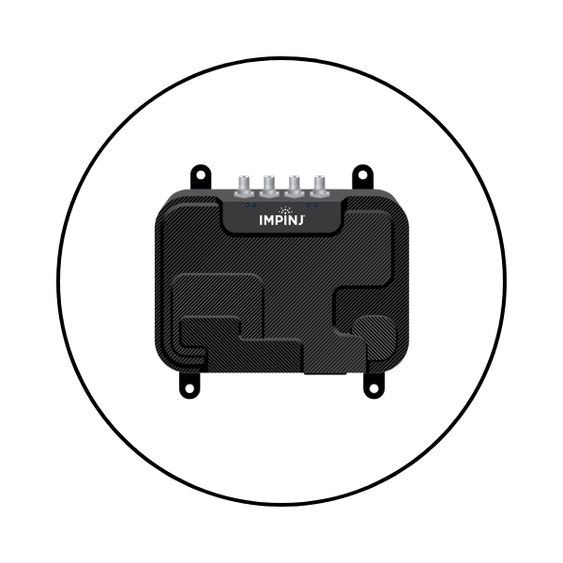
The RFID reader controls the flow of communication between all system components. It performs three essential functions:
- Generating RF Energy: Powers passive tags via connected antennas.
- Managing Communication: Interrogates tags, resolves signal collisions from multiple responses, and ensures accurate data collection even in high-density tag environments.
- Processing and Transmitting Data: Filters and structures tag reads before sending them to software or cloud platforms for further analysis and integration.
Note: While readers are often chosen based on features and connectivity, their true performance is only realised when paired with the right antenna.
Component 5: Software or middleware
Turning reads into insights

The final piece of the system is software, which captures, filters and interprets tag data.
In a retail environment, software integrates with systems such as:
- Inventory management and retail ERP systems
- Point-of-sale (POS) systems
- Warehouse management systems (WMS) and loss prevention platforms
It translates raw data into actionable insights. This data is typically stored and accessed via the cloud or a local network, supporting real-time decision-making.
Additional System Components
Depending on the application, RAIN RFID systems may also include:
- Gateways to aggregate data from multiple readers and antennas.
- Edge devices for local processing before cloud sync.
- Environmental sensors to monitor temperature, humidity or pressure alongside tag data.
- Network infrastructure to ensure robust connectivity and integration with enterprise systems.
If you are designing a RAIN RFID solution, whether in healthcare, logistics or retail, understanding how these components interact is essential. Ensuring the right antenna is selected for your environment often determines the success or failure of the entire system.
What does Times-7 offer?
Understanding the physics behind RF technology means understanding that our antennas don’t just work in labs, they work on concrete floors, retail shelves, hospital storerooms, laundry bins and beyond.
Every deployment is different. So, besides offering quality antennas in our standard portfolio, we also offer custom design services. By combining your domain knowledge with our RF expertise, we can build antennas that fit your environment, not the other way around.
To learn more about our product portfolio and custom design services click below: