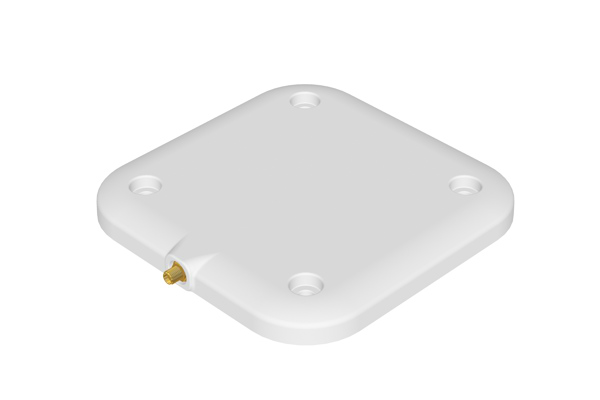
Indoor Portals

Indoor portals, freestanding or doorframe-mounted readpoints inside the warehouse, control movement between zones, confirm stock transfers between departments, and enforce process compliance at internal choke points. Unlike dock doors, indoor portals rarely face weather, but they do face density: narrow aisles, adjacent portals in pick-and-pack corridors, and RF-reflective steel racking.
Before specifying a model, confirm these five site conditions. They narrow the field from six options to one or two.
How exposed is the bay? Covered indoor bays need IP54 as a minimum. Outdoor and exposed bays require IP67 (temporary immersion up to 1 m, 30 min). Bays subject to high-pressure wash-downs, extreme humidity, or chemically aggressive environments, such as food production, cold stores, mining, require IP68, which covers prolonged immersion and sustained moisture.
Mounting position determines beam direction and read-zone shape. Overhead mounts read downward into the bay opening, suited to consistent pallet heights and forklift paths. Side mounts read horizontally across the bay width. Floor/embedded mounts read upward through the pallet base, useful where overhead clearance is limited or where a discreet, in-floor read point is required.
Physical constraints narrow the field quickly. Low overhead clearance favours compact side-mount models. In-floor embedding requires an antenna rated for sub-surface installation. Customer-facing or aesthetic environments, retail DCs, food distribution all favour compact, unobtrusive form factors. Cable routing, backplates for easy mounting, and connector type all affect deployment time for large rollouts.
How tightly must the read zone be contained? Adjacent bays, nearby inventory, and crossing forklifts all create false-read risk. The tighter the physical environment, the more important it is to choose an antenna whose beam pattern and gain minimise reads outside the intended zone. The read distance is another critical factor that controls the read zone, with far-field for mid to long distance reads, and near-field for close range on surface reads.
Circular polarisation handles randomly oriented tags reliably, making it the standard choice for dock doors, conveyors, and portals. Linear polarisation is better suited to controlled-orientation applications where the tag is always presented at the same angle.